Why Your Child Hates Assessment Books (And What to Do Instead)
Assessment book fatigue is real. Research-backed alternatives — including safe, Singapore-syllabus aware AI learning — that actually improve grades without the daily battles.
TLDR: Stop forcing your child through endless assessment books that cause cognitive overload and burnout. Switch to active learning strategies like spaced repetition and gamified quizzes to improve grades without the daily battles.
Why Your Child Hates Assessment Books (And What to Do Instead)
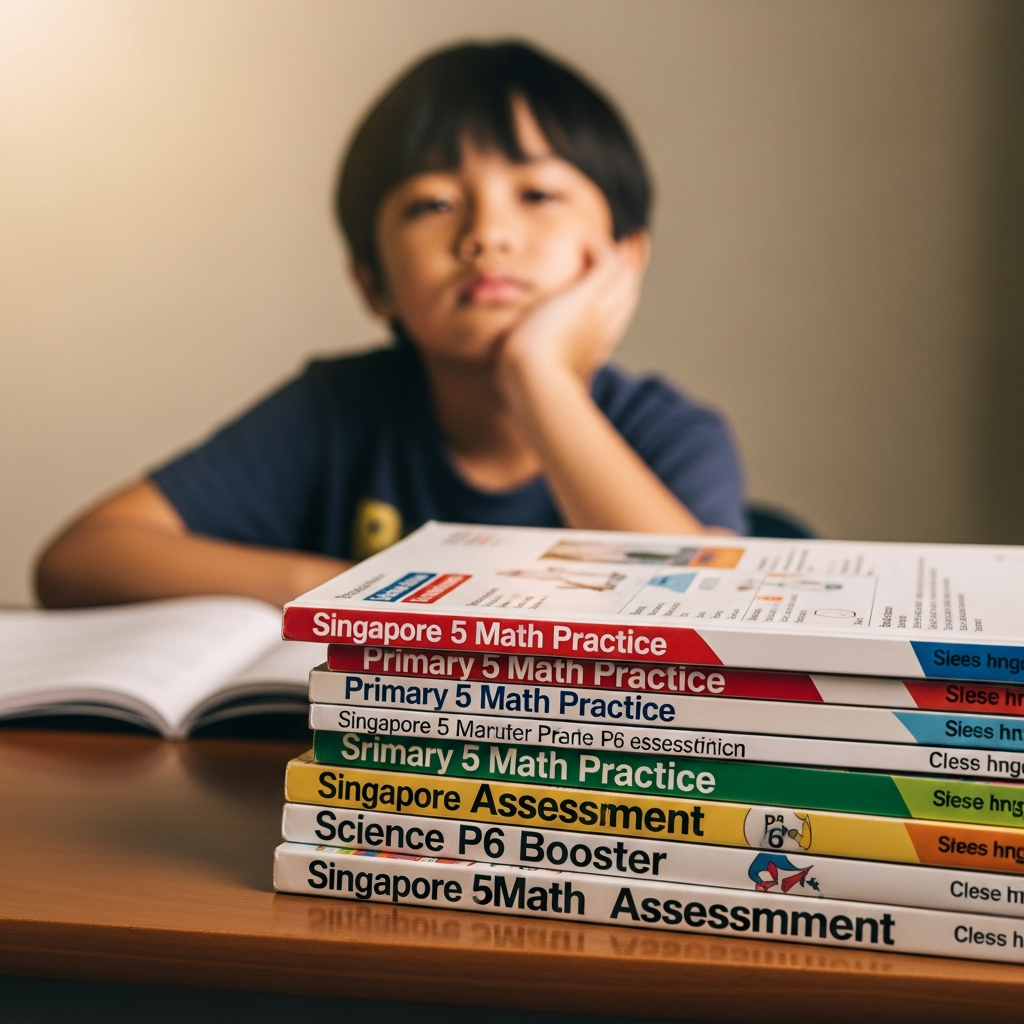
We have all seen the scene: a P5 student staring blankly at a pile of assessment books, pencil snapped, on the verge of tears. As parents in Singapore, we know that primary school revision Singapore style often means endless worksheets, but this approach is failing your child. Assessment book fatigue is real, and it stems from cognitive overload rather than laziness. When you switch to active learning strategies, you will see grades improve without the daily battles.
Why Children Resist Repetitive Drilling
Children resist repetitive drilling because it triggers cognitive fatigue rather than genuine understanding. The human brain is not designed to retain information through rote memorization of similar questions; it learns through pattern recognition and application. When a child solves twenty identical multiplication problems, their brain goes on autopilot after the fifth one, leading to "mindless writing" where they are marking answers without processing the logic.
Consider a P4 Math problem on fractions. If a child completes a full assessment book chapter on fractions by copying answers, they may pass the drill but fail a word problem that requires applying the same concept in a real-world context. This is why you see high scores in workbook drills but lower marks in actual exams. The resistance you see is a protective mechanism against boredom and frustration. They know the drill is meaningless, yet they feel forced to do it.
The Diminishing Returns of Assessment Books
More worksheets often lead to burnout, not mastery, creating an illusion of competence in students. Research in educational psychology suggests that after a certain point of repetition, the marginal gain in learning drops to near zero, while the cost in mental energy skyrockets. This is particularly dangerous during SA1 and SA2 preparation seasons when the pressure is highest.
For example, a student might spend three hours completing a Science assessment book on "Plants." By hour two, they are guessing answers based on keywords rather than understanding biological processes. When they face a PSLE-style question requiring them to design an experiment, they fail because the assessment book never tested their ability to create knowledge, only recall it. Parents often feel they are doing the right thing by buying more books, but this approach is actually widening the gap between effort and results.
Better Alternatives for Effective Learning
Active recall and spaced repetition work better than passive reading for long-term retention and exam performance. Instead of focusing on quantity, focus on quality and timing. One effective method is past year paper analysis. Have your child attempt a specific SA1 or PSLE past paper question from a previous year, then review the marking scheme together. This teaches them the examiner's mindset.
Spaced repetition involves reviewing material at increasing intervals. Instead of doing one hour of Math every day, try 30 minutes on Monday, 30 minutes on Wednesday, and a quiz on Friday. This forces the brain to retrieve information, strengthening neural pathways. For English comprehension, rather than reading five passages, read one deeply and discuss the inference questions aloud. This shifts the focus from finishing a workbook to mastering the syllabus concepts required by Singapore primary school standards.
Gamified Learning Boosts Motivation
Turning study into a game boosts dopamine and retention, making revision feel less like a chore. Traditional books lack immediate feedback and engagement, which is crucial for maintaining focus during long study sessions. This is where modern tools like SgStudyPal come into play, specifically through our boss fight quizzes.
In the app, students face "bosses" that represent difficult topics like Algebra or Heat Energy. To defeat the boss, they must answer questions correctly. This gamified revision Singapore parents are looking for transforms anxiety into excitement. For instance, a P6 student struggling with Geometry can unlock a new level by mastering circle theorems, receiving instant feedback and a sense of achievement. This approach aligns with how children naturally play and learn, making the primary school revision Singapore curriculum feel accessible and achievable rather than overwhelming.
Conclusion
You do not need to buy more assessment books to see your child improve. By understanding the psychology behind their resistance and adopting strategies like spaced repetition and gamified learning, you can reduce stress for both of you. Start small by replacing one worksheet session with a targeted quiz or past paper analysis. With the right tools and mindset, your child can master the syllabus without the tears.
Start using SgStudyPal for free today.