How to Teach Children AI Prompting: Why Question-Asking Beats Answer-Searching
Learn how to teach children AI prompting safely. Discover why Power Prompting is the critical study skill for your child's AI future and PSLE success.
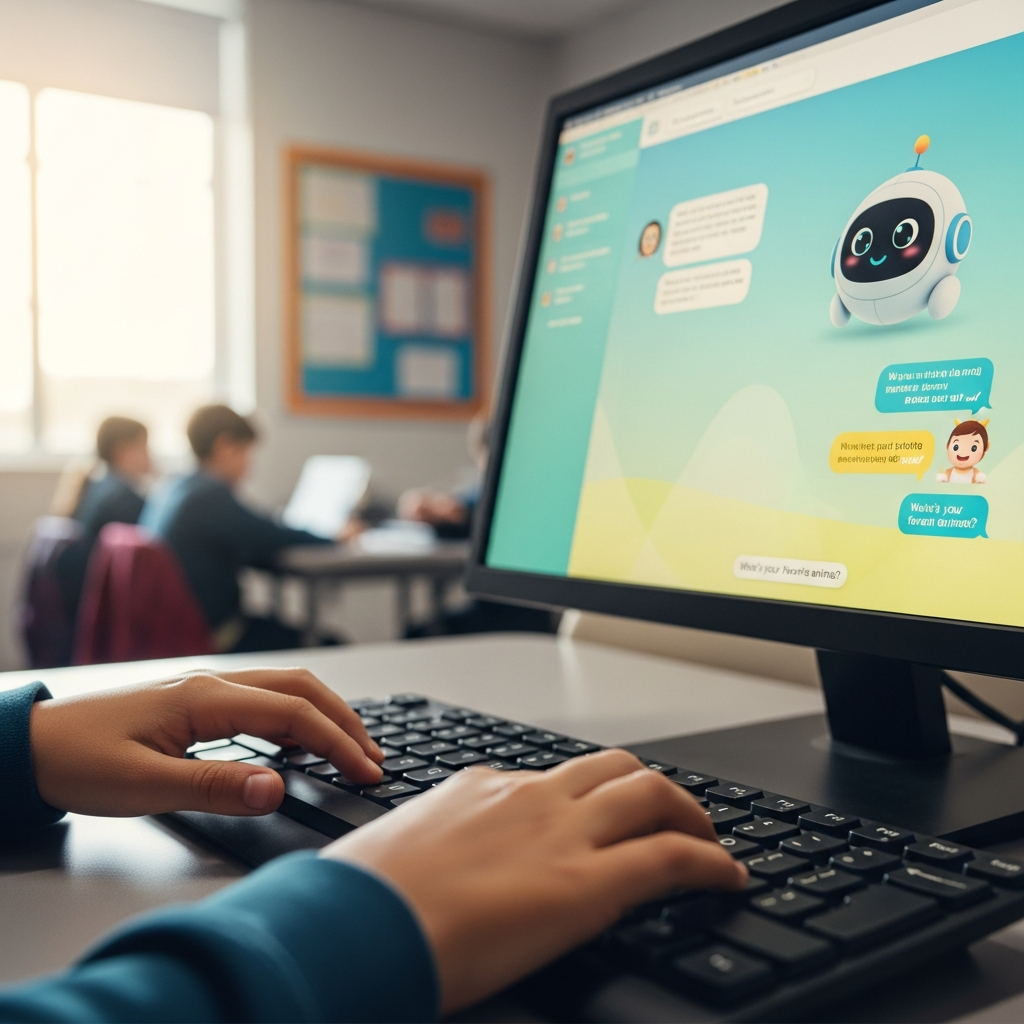
TLDR: Teaching children AI prompting shifts their focus from passive answer-seeking to active critical thinking. By mastering Power Prompting, students learn to ask precise questions that build cognitive skills rather than relying on generic shortcuts. This approach future-proofs their education for the PSLE and beyond.
You’re not alone if you feel helpless watching your child type a query into a chatbot and expect a magic answer.
You’ve probably noticed it already. Instead of grappling with a difficult Math problem or researching a topic for Science, your child opens an app and types, "Explain this to me." It looks like productivity, but often, it’s just shortcutting the learning process.
This is why teaching your child how to teach children AI prompting isn’t just about coding skills. It’s about critical thinking, agency, and ensuring they don’t become dependent on AI to do the work that builds their brain.
The Reality Check
Let’s face the scary pattern first. Most students are already using AI for schoolwork, and most of that use is completely unsupervised.
They are likely using generic prompts that yield generic answers. One moment they are learning, the next they are copy-pasting text without understanding a word of it. This is where the danger lies—not in the technology itself, but in the lack of guidance.
If your child uses AI like an answer key, they won’t fail the PSLE because of the technology. They will fail because they haven't learned how to think through a problem when the AI isn't available.
The Chicken Rice Analogy
Here is the simplest way to understand prompting.
Imagine you are standing at a hawker centre with a hungry child.
Option A: The child says to the auntie, "Give me food." The auntie might give you porridge. Or rice. Or curry. You get served something, but it’s not what you need.
Option B: The child says, "I want chicken rice with extra chilli on the side, please." The auntie knows exactly what to do. The result is specific, useful, and high quality.
Just saying 'give me food' vs 'I want chicken rice with extra chilli on the side' is exactly what we are talking about.
Most kids use Option A with AI. They type "Help me with fractions" or "Write an essay about the water cycle." The AI gives a generic response. The child copies it. They get an A on paper, but zero marks on understanding.
Option B is Power Prompting. "I need help understanding the water cycle. I am P5. Please explain the three stages using a diagram description, and include one real-world example from Singapore's weather."
See the difference? You get context, constraints, and clarity.
Why Prompting is a Life Skill
When we teach our kids to be precise, they aren't just learning to talk to bots better. They are learning to talk to people better.
A child who learns to ask specific questions of AI will instinctively ask better questions of their teachers. Instead of saying "I don't get it," they will say, "I don't understand how the density calculation works for liquids versus solids."
That shift in communication is what separates average performers from high flyers in the Singapore primary school system. It signals to the teacher, "I have thought about this, I just need help with this specific part."
It also teaches them to ask better questions of themselves. Before typing a prompt, they have to think: "What do I already know? What am I missing? What do I actually want?"
This is AI Readiness Module 3: Power Prompting, and it is the core of why we built SgStudyPal.
Safe AI Learning: A Sandbox for Your Child
You want your child to learn this skill, but you can't leave them on the open internet. You need guardrails.
At SgStudyPal, we don't just let your child chat with a bot. We structure the experience so they learn to ask better questions of AI.
Here is how we do it safely:
- Singapore-Syllabus Aware Content: Your child is never just "chatting." They are working on actual P3-P6 topics aligned to the syllabus.
- Guardrails: Safe, structured AI access. No copy-pasting answers. Step-by-step learning with guardrails.
- Feedback Loop: They bring their real homework or practice questions. The AI tutors them to the solution, then tests them to prove they understood.
- Personalised Practice: Exam prep made easier with personalisation to your child's interest — AI-generated practice questions themed around what they already love.
When your child learns to prompt effectively within SgStudyPal, they are learning a skill that will serve them in secondary school, polytechnic, and university. They are learning how to leverage technology without losing their own cognitive abilities.
It Starts With You
I built SgStudyPal because my own child is starting P1 next year and I wanted him to experience AI the right way. I didn't want to ban the technology, and I didn't want to let it ban him from learning.
I want your child to be the 8% who knows exactly what they need from AI, so they can stop fearing the technology and start using it as the power tool it is.
Teaching your child how to teach children AI prompting is an act of future-proofing. It tells them that they are in charge, and the AI is just the helper.
Don't leave this skill to chance. Don't wait for them to use it unsupervised and get stuck in a generic loop.
Take the fear out of the equation. Give them a structured, safe way to learn the skill that matters.
Start using SgStudyPal for free today.e today.